











Network Tokenization: How It Reduces Fraud and Improves Authorization Rates
Network tokenization is a technology developed by Visa, Mastercard, and other card schemes that replaces a card's primary account number with a unique token at the network level. Unlike gateway-level tokenization, where the token is managed by the payment processor, network tokens are issued and validated by the card scheme itself, creating a more secure and reliable representation of the card credential that follows the card through updates, replacements, and account changes. Merchants and platforms that implement network tokenization see measurable improvements in authorisation rates, reductions in fraud losses, and simplified PCI DSS compliance.
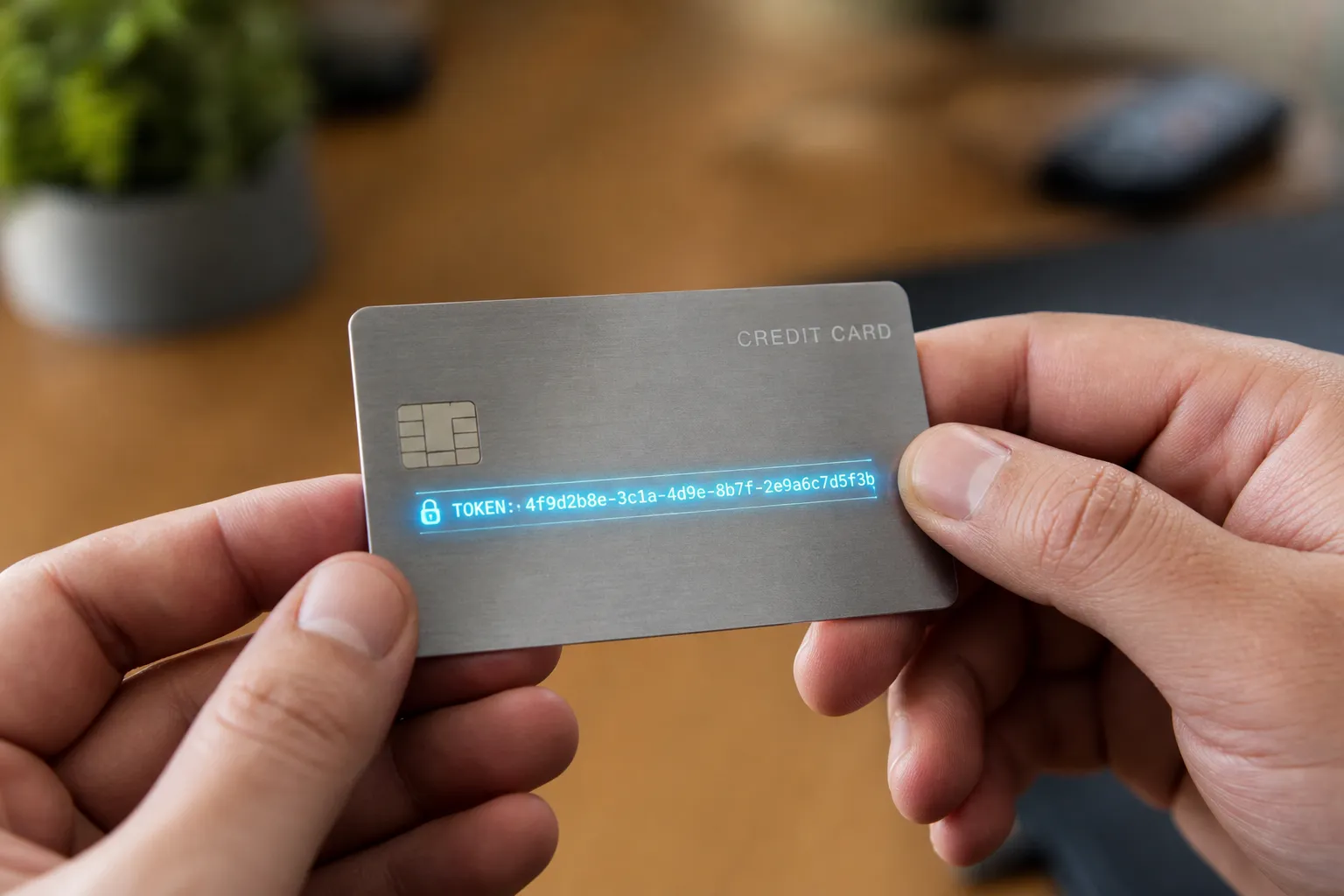
What Network Tokenization Is and How It Differs From Gateway Tokenization
Tokenization in payments replaces a sensitive card number (the Primary Account Number, or PAN) with a non-sensitive surrogate value (the token) that can be used in payment flows without exposing the underlying card data. If a token is intercepted by an attacker, it has no value outside its original context.
Gateway tokenization: The payment gateway generates a token and maintains a mapping between the token and the actual card number in its own vault. The token is unique to that gateway. If the merchant moves to a different processor, the tokens must be migrated or re-collected because the old gateway's tokens are meaningless to the new processor. If the cardholder gets a new card number, the gateway token must be updated, which typically requires a new payment collection from the customer.
Network tokenization: The token is issued by the card network itself (Visa Token Service, Mastercard Digital Enablement Service). The token is tied to the card credential at the issuer level, not just the card number. When the cardholder gets a replacement card after expiry or loss, the underlying credential (and therefore the network token) may remain valid because the token maps to the account, not the physical card number. The network token travels with the account rather than being abandoned when the card number changes.
This fundamental difference creates several advantages for merchants using network tokens over gateway tokens, particularly for recurring billing, stored credential transactions, and subscription businesses where card credentials are stored and reused over extended periods.
For merchants operating in high-risk categories who already work with a high risk payment gateway, network tokenization adds an additional layer of fraud protection and can improve authorisation rates with issuing banks that prioritise token-based credentials in their authorisation decisioning.
How Network Tokens Work in a Payment Transaction
The network token lifecycle involves several distinct steps that collectively ensure a more secure and reliable payment credential.
Token provisioning: When a cardholder adds a card to a merchant's stored payment method system, the merchant's gateway requests a network token from the relevant card scheme's token service. The request includes the card number, expiry, and the merchant's token requestor ID. The scheme validates the card with the issuer and returns a token (typically 16 digits in the same format as a PAN) and a cryptogram key.
Transaction use: When a subsequent transaction uses the stored credential, the gateway generates a transaction-specific cryptogram using the network token and the cryptogram key. The transaction is submitted to the acquirer with the network token plus cryptogram. The acquirer forwards this to the card scheme, which de-tokenises back to the real PAN and validates the cryptogram before passing to the issuer for authorisation.
Token lifecycle management: The card scheme manages token validity. When a cardholder's card is renewed, reported lost, or upgraded, the scheme can automatically update the token mapping without requiring the merchant to collect new card details from the customer. This is called account updater functionality at the network level and directly reduces declined transactions caused by expired or replaced card numbers.
Cryptogram uniqueness: Each transaction generates a unique cryptogram. Even if a malicious actor intercepts the token and cryptogram from one transaction, they cannot reuse it because the cryptogram is single-use and verified by the scheme. This is a significantly higher security standard than a static card number, which can be replayed across different merchants if stolen.
Benefits: Higher Authorization Rates, Lower Fraud, Better Customer Experience
The practical benefits of network tokenization for merchants are measurable and commercially significant.
Higher authorisation rates: Issuing banks treat network-tokenised transactions with greater confidence than PAN-based card-not-present transactions. The unique transaction cryptogram proves the merchant has a legitimate token issued by the scheme, which reduces the probability of the issuer applying additional friction or declining the transaction as a precaution. Merchants implementing network tokenization typically see authorisation rate improvements of 1-3 percentage points, which on high volumes translates directly to meaningful revenue recovery.
Reduced card-not-present fraud: Network tokens are useless outside their authorised merchant context and are validated by a transaction-specific cryptogram that cannot be replayed. An attacker who obtains a network token from a data breach cannot use it to process unauthorised transactions at other merchants, unlike a raw PAN. This significantly reduces the exposure to card-not-present fraud resulting from credential theft.
Reduced payment failures from card updates: For subscription and recurring billing businesses, card expiry and replacement are a constant source of payment failures. Account updater services help, but they are reactive. Network tokens tied to the account credential rather than the specific card number are inherently more resilient to card changes, reducing involuntary churn from failed recurring charges.
Customer experience improvement: Customers do not need to update their payment details with every card renewal when the merchant uses network tokenization correctly. The stored credential remains valid through card replacements, reducing the friction of updating payment information and the notification messages asking customers to re-enter their card.
Liability shift on fraudulent disputes: Network-tokenised transactions may qualify for enhanced liability protections in certain fraud dispute categories, depending on the card scheme's specific rules and the authentication method used alongside the token.
Implementation: What Merchants Need to Enable Network Tokenization
Implementing network tokenization requires gateway-level support and a small number of integration changes on the merchant side. The complexity of the implementation depends on the merchant's current integration architecture.
Gateway capability requirement: Network tokenization is only available through gateways that are registered token requestors with Visa and Mastercard. Not all gateways support network tokenization. The gateway must hold the appropriate certification from each card scheme to request and manage network tokens on behalf of merchants.
Integration changes: For merchants using a gateway that supports network tokenization, the primary change is in how stored credentials are saved. Instead of storing a gateway token, the merchant's system stores the network token returned during the provisioning step, along with associated metadata. Transaction submission changes to include the network token and the dynamically generated cryptogram rather than a static gateway token.
Stored credential framework: Network tokenization is most valuable when combined with the card scheme's stored credential framework, which defines how subsequent merchant-initiated and customer-initiated transactions using stored credentials are flagged in the authorisation request. This framework, combined with network tokens, gives issuers the maximum confidence signal for approval.
Sandbox testing: RoxPay's sandbox environment allows merchants to test network token provisioning, transaction submission with token and cryptogram, and account updater scenarios using the provided test card numbers. Full API documentation is available at app.roxpay.eu/api/v4/docs.
To start your RoxPay application and discuss network tokenization capability for your integration, the onboarding team can confirm current token requestor status and guide the technical implementation for your merchant account.
Network Tokenization and PCI DSS Compliance
PCI DSS (Payment Card Industry Data Security Standard) requires merchants and processors to protect cardholder data, primarily the Primary Account Number. Network tokenization has a direct impact on the merchant's PCI DSS scope and compliance obligations.
Scope reduction: When a merchant uses network tokens instead of storing raw PANs, the token itself is not considered cardholder data under PCI DSS because it cannot be used to make payments outside the authorised merchant context without the cryptogram. This means the systems storing network tokens may be excluded from PCI DSS scope, reducing the number of systems, processes, and controls that must be included in the compliance programme.
Not a complete replacement for PCI compliance: Network tokenization reduces scope but does not eliminate all PCI obligations. The gateway and payment processing infrastructure must still maintain PCI DSS compliance. The merchant's own systems involved in payment flows remain in scope to the extent they interact with payment data. The scope reduction benefit is most significant for merchants who store large numbers of card credentials for subscription billing.
Gateway-level certification: Using a PCI DSS Level 1 certified gateway is the foundation. RoxPay holds PCI DSS Level 1 certification (certificate number QS83A47X629), the highest certification tier, covering the full payment processing infrastructure. Merchants using RoxPay's drop-in UI or hosted page integration do not handle raw card data on their own systems, further minimising their PCI scope.
Documentation for QSAs: When a merchant implements network tokenization, they should document the token flow in their PCI DSS scope documentation for their Qualified Security Assessor. Clearly demonstrating that tokenised credentials rather than PANs are stored, and that the cryptogram generation happens in the gateway rather than on merchant infrastructure, supports the scope reduction argument.
Frequently Asked Questions
Is network tokenization the same as 3D Secure?
No. Network tokenization and 3D Secure are separate technologies that can be used independently or together. Network tokenization replaces the card number with a secure token to reduce fraud on stored credentials. 3D Secure is an authentication protocol that verifies the cardholder's identity during a transaction. Both improve security and can complement each other, but they address different points in the payment flow.
Do customers notice any difference when network tokenization is enabled?
In most cases, no. The checkout experience is unchanged. The customer enters their card details once, and the gateway provisions the network token in the background. For recurring billing customers, the main noticeable difference is that their payment method is less likely to decline due to an expired card, and they receive fewer requests to update their payment details.
Can network tokens be used across multiple merchants?
No. Network tokens are issued for a specific merchant's use context. A token provisioned for Merchant A cannot be used to process a payment at Merchant B. This domain binding is one of the key security properties of network tokens: even if the token is compromised, it can only be used in the context for which it was issued, and only with the correct transaction-specific cryptogram.
You might also like
High Risk Payment Gateway
Secure payment processing for high-risk industries with multi-acquirer routing and chargeback protection.
Small Business Payment Solutions
Transparent IC++ pricing, free Smart POS terminal, and 24-hour activation for small businesses.
E-commerce Payment Integrations
One-click plugins for WooCommerce, Magento, and PrestaShop with full API access.
Optimize your payments today
RoxPay supports network tokenization, 3DS2, and tokenised stored credentials within a PCI DSS Level 1 certified platform. IC++ pricing from 0.35%, settlement to any SEPA bank within 48 hours.
✓ No monthly fixed costs · ✓ Activation in 24 hours · ✓ Dedicated technical support